How a Fractional Paid Media Manager Uses Optmyzr as a Toolbox for Different Client Challenges
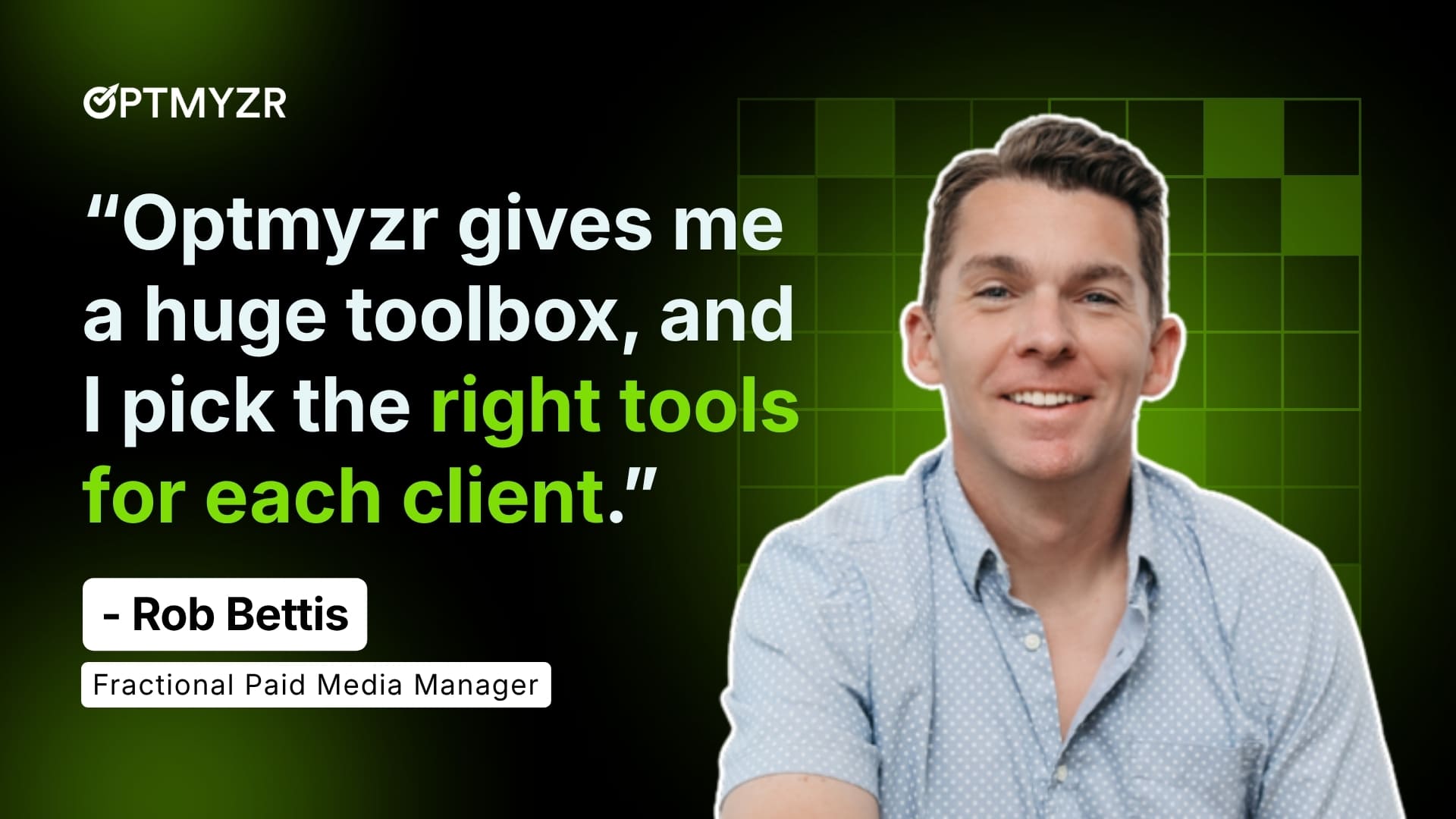
Rob Bettis runs paid media solo for DTC and Shopify brands. See how he uses Blueprints, Campaign Automator, and Rule Engine to fit each client.

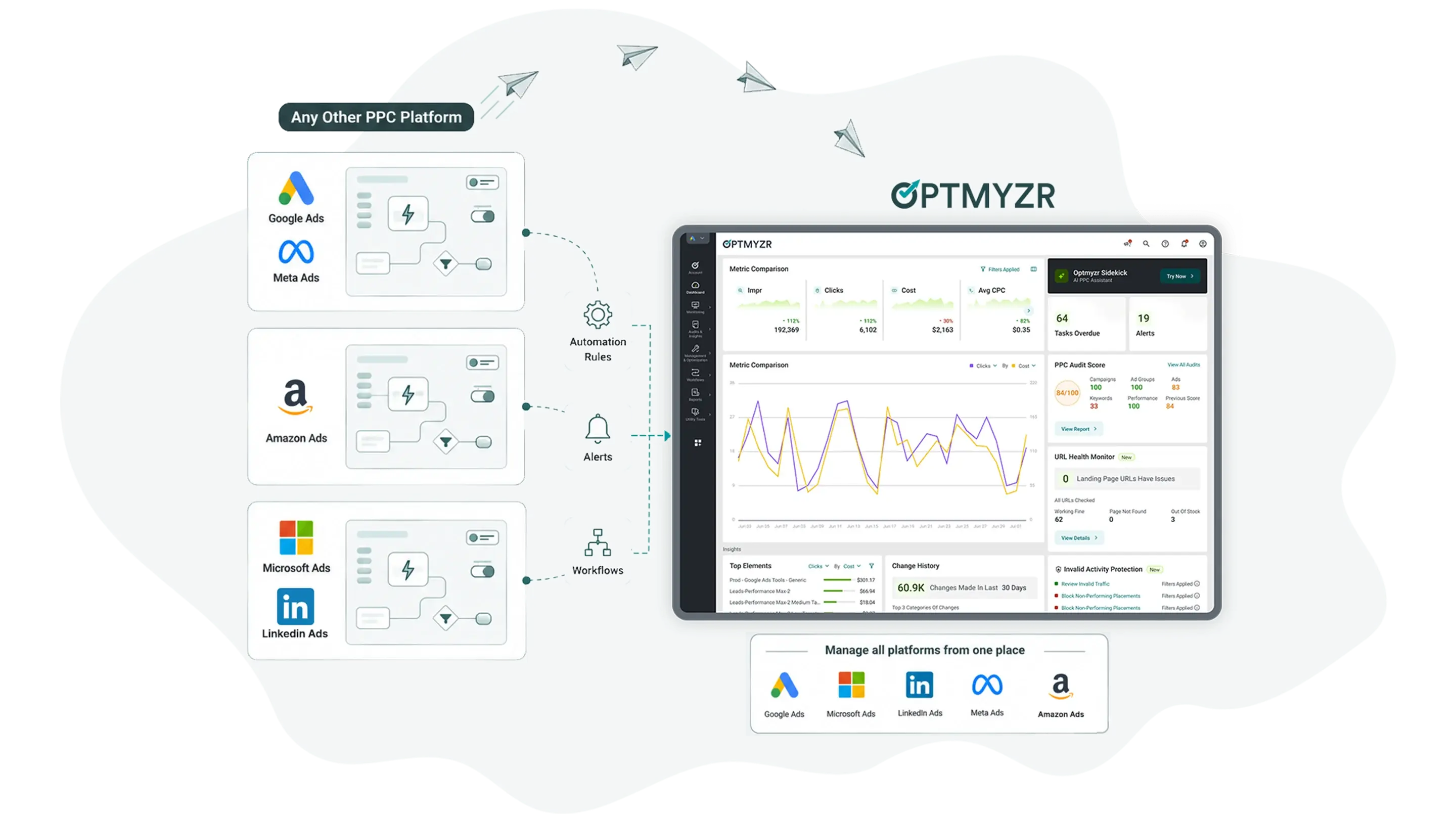
Optmyzr is a multi-platform PPC management suite for agencies and enterprise PPC teams covering Google Ads, Microsoft Ads, Amazon Ads, and Meta. It combines automation (Rule Engine), reporting, bid management, and account auditing in a single platform built for advertisers managing significant ad spend across multiple accounts and channels.
Best for: Agencies and in-house teams managing significant PPC spend who need automation that runs on a schedule, cross-platform reporting they can share with clients, and the ability to act on account data, not just analyze it

Adzviser is a marketing data connector that pulls performance data from 45+ sources (paid advertising, web analytics, organic social, e-commerce, email, and CRM) and routes it into AI tools (Claude, ChatGPT, Gemini), spreadsheets (Google Sheets, Excel), BI dashboards (Looker Studio, Power BI), and data warehouses (BigQuery, Amazon S3). It's a flat-rate subscription built around giving analysts and marketers flexible access to their data in the tools they already use. Adzviser does not make changes to ad accounts.
Best for: Freelancers, agencies, and in-house marketers who need a versatile, affordable data layer for PPC reporting, analysis in Sheets or Looker Studio, and AI-powered queries, and are comfortable building their own reporting structures from there.
You need multi-platform automation, analysis, and reporting at scale
You need to act on account data, not just access it: bulk bid changes, budget rules, keyword automation, and campaign pausing applied directly to live accounts on a schedule
You run an agency and need client-ready reports with scheduled delivery, live Shareable Dashboards, and multi-account management built into the same platform as your automation
You want to understand why a metric changed, not just query what it is. PPC Investigator pinpoints which keyword, placement, or device moved the number, with amounts attached
You use Claude or ChatGPT and want those tools to return PPC-specific analysis and Rule Engine strategies from live account data, not raw numbers you then need to interpret yourself
Your team manages dozens of accounts and needs workflow standardization, KPI alerting across five platforms, and an audit trail of every automated change
You need data access, AI queries, and flexible reporting destinations
You need a data connector to route PPC and marketing data into tools you already use (Google Sheets, Looker Studio, Power BI, or AI assistants like Claude or ChatGPT) and want the flexibility to build analysis your own way
Your data needs span beyond paid advertising: email platforms, CRM tools, organic social, and e-commerce sources alongside ad accounts, all from a single subscription
You're a solo operator or small team where budget is a primary constraint and Adzviser's flat-rate pricing is significantly more accessible than a full PPC management platform
You prefer to build your own reporting views in Looker Studio, Sheets, or BI tools rather than using a native report builder
Adzviser only puts your ad data in front of you. But these three capabilities are what happen next, and they don't exist in Adzviser.
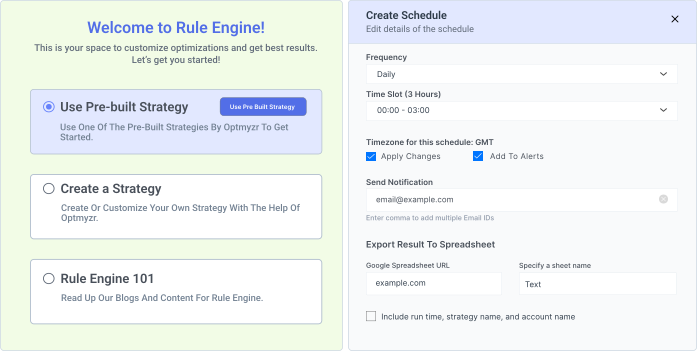
Build multi-condition automation strategies that run on a schedule across Google Ads, Microsoft Ads, Amazon Ads, Meta, and LinkedIn, without touching the ad platform each time. Every strategy runs in preview first: see every change it would make, approve or adjust individual items, then apply. Adzviser can show you which keywords have a cost per acquisition (CPA) over $50. Rule Engine pauses them automatically while you sleep.
Adzviser can query what your CPA is. PPC Investigator tells you why it changed. The Cause Chart maps how metrics relate to each other; the Root Cause Analysis names the specific keyword, device, placement, or segment that moved the number, with quantified contribution per element and a date-range comparison built in.

Configurable KPI and budget threshold alerts across all five platforms (Google, Microsoft, Amazon, Meta, and LinkedIn), delivered to email, Slack, or Microsoft Teams the moment something shifts. Portfolio-level alerts monitor groups of accounts as one entity. Adzviser has no native alerting system; threshold monitoring requires building it yourself in an external tool using Adzviser data.

Build custom reports combining Google Ads, Microsoft Ads, Amazon Ads, Meta, LinkedIn, and GA4 in a single view, then schedule delivery weekly, monthly, or daily. Clients get a live dashboard through email-delivered access credentials rather than a static file that needs manual resending every month. White-labeled with your own domain on Premium and Enterprise. With Adzviser, the report is built in whatever external tool you connect to (Looker Studio, Sheets, or a BI tool), which means setting up and maintaining that infrastructure yourself.

Structured, repeatable task sequences for account teams, built into the platform rather than managed in a separate project tool. Define the workflow, set how often each step repeats, assign ownership, and Blueprints tracks completion across the team. Steps with nothing to action auto-skip so the sequence keeps moving. Lesley V., managing healthcare agency accounts, put it plainly: no task gets left behind. Adzviser has nothing in this space.

Goes further than tracking spend against target. When a campaign underspends, Optmyzr identifies whether it's budget-constrained or whether the campaign structure won't absorb more spend regardless, and only recommends increases where the money can actually land. Automated campaign pausing when monthly budget is hit, re-enabling the following month, and a simulation layer to model changes before they touch the live account. This is the feature that has come up in nearly every sales conversation in 2026. Adzviser can surface spend data. This one acts on it.


The core distinction in this comparison is read versus read-write. Adzviser surfaces data. Optmyzr acts on it. Rule Engine applies automation across five platforms on a schedule, with a preview mode that shows every change before it runs. One G2 reviewer described using it as "the equivalent of having a team of PPC managers monitoring accounts 24/7." That compounding effect is what agencies cite most: Bia C. saved 35 hours per strategist per month in a trial period.
The AI comparison is also closer than it might appear, but different in kind. Adzviser routes raw account data to Claude or ChatGPT. Optmyzr MCP routes PPC-specific intelligence: why a metric changed, which Rule Engine strategy fits the problem, where the account is losing impression share and to whom. One is a data pipe. The other is a PPC analyst.
For agencies specifically, the full platform (native reports, Shareable Dashboards, Account Blueprints, portfolio-level alerts, and the audit trail from Optimization History) replaces a stack of separate tools that Adzviser alone would require you to assemble yourself.

Adzviser covers 45+ data sources (paid advertising, web analytics, organic social, e-commerce, email, and CRM) from a single flat-rate subscription built and maintained by a former Google engineer. Unlike comparable tools such as Supermetrics, Dataslayer, and Coupler.io, there are no per-destination charges, no query limits, and no row caps. Every plan includes every destination: Sheets, Looker Studio, Power BI, Claude, ChatGPT, BigQuery, and S3.
For analysts and marketers who already know where they want to build their reports, Adzviser removes the data layer as a constraint. Reviewers on Capterra consistently name it as a Supermetrics replacement at a fraction of the cost, and the pricing model bears that out.
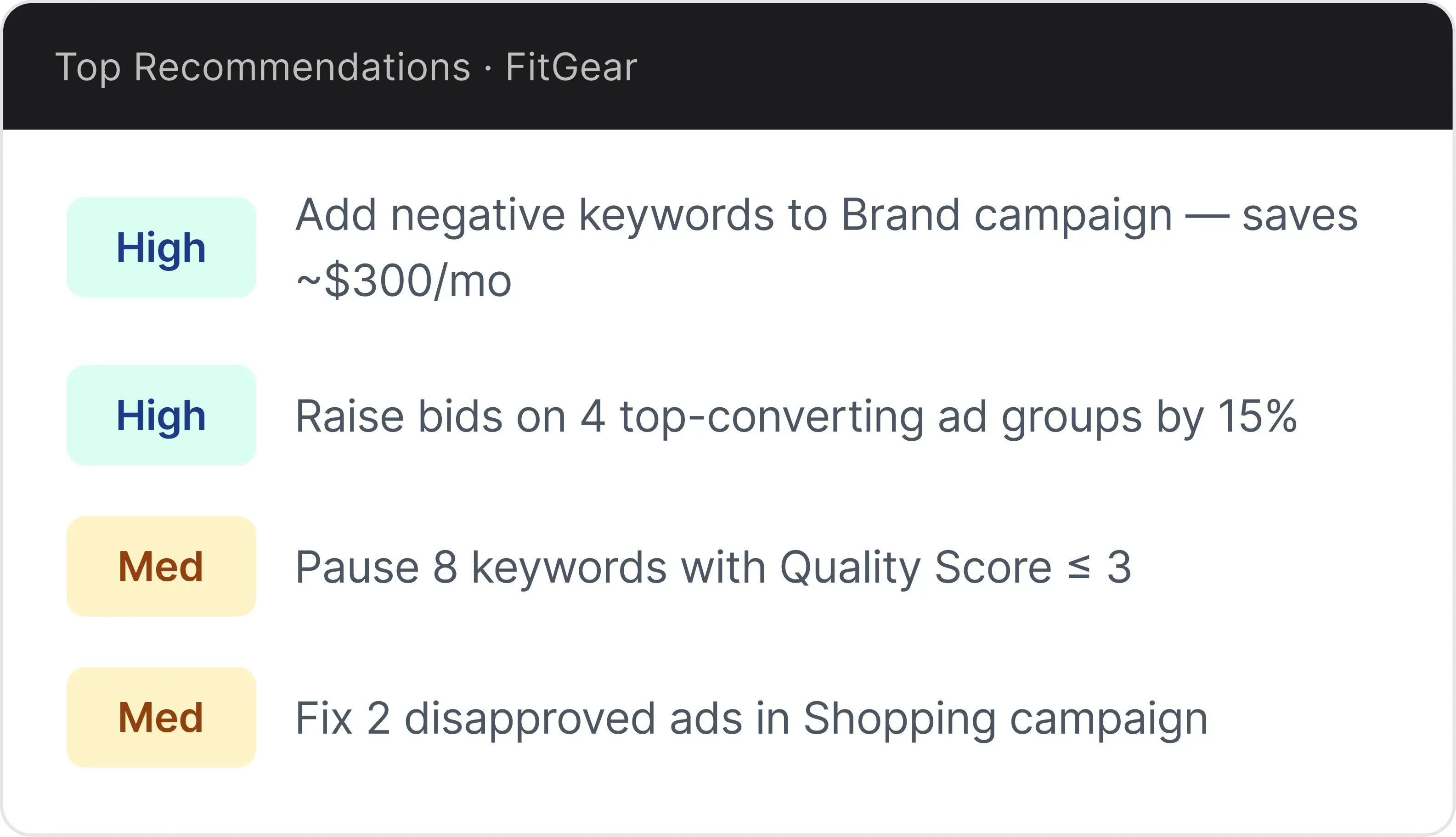
Ask about any account and the MCP pulls live data from Optmyzr, identifies the campaigns or ad groups responsible, and breaks down what changed in the period. Not just the raw numbers.

Why did my Google Ads CPA go up 22% this month? Which campaigns are responsible and what changed?
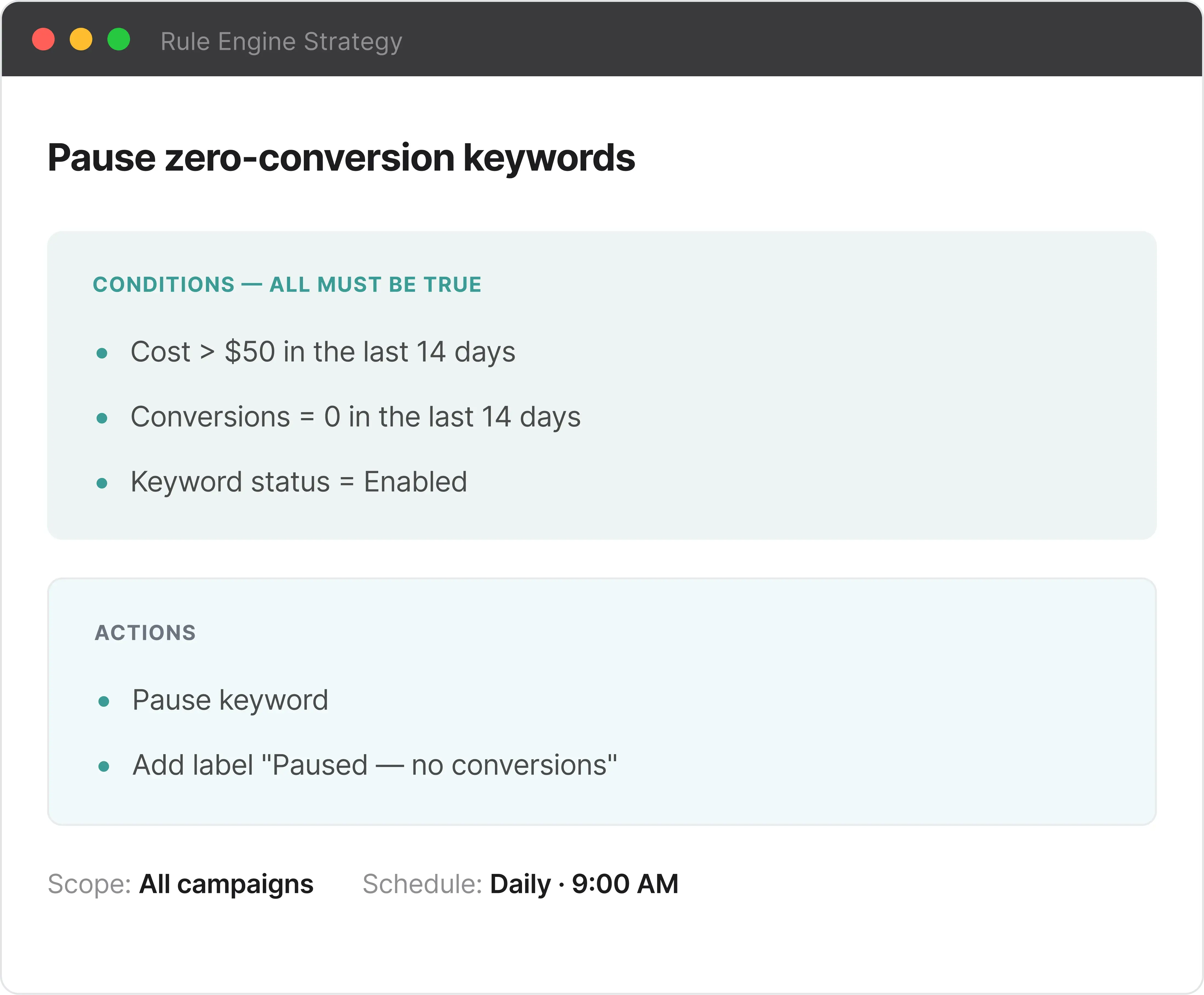
Describe the automation problem you're trying to solve. The MCP writes the Rule Engine strategy (conditions, thresholds, and actions) ready to review and apply directly from Claude.

Create a Rule Engine strategy to pause keywords that have spent more than $30 with zero conversions in the last 14 days.
Optmyzr is listed in the Claude connector directory. You can add it in one click, with no manual setup.
Add the Optmyzr MCP server URL in ChatGPT Settings. Once it is connected, ChatGPT can use every Optmyzr capability.
Cursor, Windsurf, n8n, and other tools can access your Optmyzr data the same way.
Based on publicly available information.
Tiered by monthly ad spend under management across all connected platforms. All five ad platforms included on every plan. No per-account or per-seat charges.
Rule Engine, reporting, and auditing on all plans
Google, Microsoft, Amazon, Meta, and LinkedIn on every plan
Daily automation and white-labeled dashboards on Premium and Enterprise
Platform Migration Service on Premium and Enterprise
14-day free trial, no credit card required
Flat-rate plans. All features and all destinations included at every tier; plans differ only by the number of data sources that can be connected. No per-account charges, no per-query limits, no per-destination fees. Described using a "coffee cup size" model: same quality, different volume.
All destinations included on every plan (Sheets, Looker Studio, Claude, ChatGPT, BigQuery, S3, and more)
Unlimited queries and unlimited scheduled refreshes
No row limits, no account connection limits
14-day trial for $0.99
Our Platform Migration Service replicates your existing setup — automations, reports, and workflows — inside Optmyzr. You don't have to start over.
Operational configuration — automation rules, alerts, and account structures rebuilt inside Optmyzr
Reporting and dashboards — custom reports rebuilt to match your existing formats
Workflow management — recurring optimization routines and structured workflows carried over
Complimentary for Premium and Enterprise plans.
Read the full details and fair usage policy
Premium & Enterprise
Head-to-head comparison • Last updated: August 25, 2026

Rob Bettis runs paid media solo for DTC and Shopify brands. See how he uses Blueprints, Campaign Automator, and Rule Engine to fit each client.

The Düsseldorf-based Google Ads agency uses Optmyzr to automate account monitoring, manage product feeds, keep budgets on track, and bring data from across the PPC workflow into one dashboard.

The Chicago–Milwaukee agency has grown with Optmyzr for nearly a decade, using it as a diagnostic to read accounts fast, then putting an expert in the chair to decide what to do about what it finds.